What Materials Are Used to Make an Implant Crown?
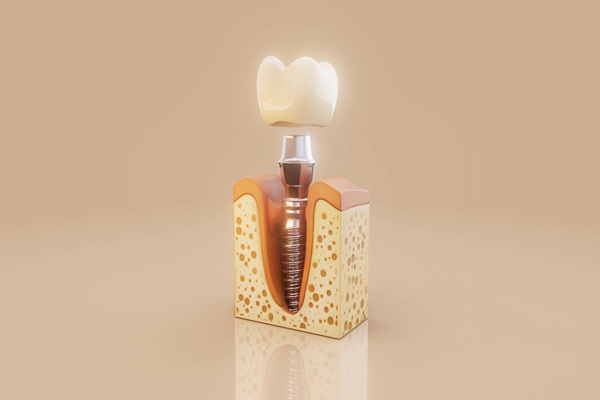
An implant crown is made of strong and safe materials to give the patient a reliable long-term replacement option for missing teeth. If you have questions about the materials used to make an implant crown, this review can help you understand what exactly each component is made of and why dentists use these particular materials.
Reviewing the implant crown materials and process
There are three primary components of an implant crown restoration for tooth loss: placing the dental implant, installing the abutment, and cementing the crown itself. Each component plays an integral part in the restoration process. They are made of the most appropriate materials to provide a durable and attractive replacement for those missing teeth.
The dental implant
The dental implant is a titanium post that is fixed in the jaw above or below the missing tooth. The reason dentists use titanium for implant restoration is that it can osseointegrate with the jawbone. This means the implant can fuse with the natural bone inside the jaw for a reliable and strong hold for the long term.
The abutment
The dental abutment is typically made of metal. Its role is to serve as a connector between the dental implant and the dental crown. The abutment is not visible and is completely covered by the dental crown. Without it, the crown would not have as secure a hold. With abutments, implant crowns commonly last for more than 15 years.
The dental crown
A common type of dental crown used for dental implant restorations is zirconia crowns. These are made of zirconium dioxide, provide ideal durability, and match the shade and appearance of natural teeth. While there may be other material options available for an implant crown, such as porcelain or metal, zirconia is often recommended.
How the treatment process works
The treatment process for an implant crown is different for every patient. That said, it typically includes a minor surgical procedure where the dentist makes an incision into the gums, drills a tiny hole in the jawbone, and positions the titanium dental implant. The mouth will need time to heal afterward. The abutment and dental crown can be placed on the same follow-up procedure, about four to eight months after the implant placement.
When an implant crown is recommended
Implant crowns are ideal for patients who have a single missing tooth and want the most long-term and natural-looking replacement option. However, an implant partial denture (bridge) or implant-supported completed denture may be a better solution for replacing multiple teeth in a row or on an entire arch.
Discuss implant crown treatment with our team today
You can learn more about implant crowns and the materials used for these restorations by contacting our dental team and scheduling a friendly consultation. We can answer any questions that you may have, and we can put together an implant crown treatment plan that works for you, your preferences, and your schedule. Call our Mt Pleasant to learn more about our services.
Request an appointment here: https://www.sweetsmilesracine.com or call Sweet Smiles Mt Pleasant at (262) 276-4601 for an appointment in our Mt Pleasant office.
Check out what others are saying about our services on Yelp: Implant Crown in Mt Pleasant, WI.
Related Posts
While toothaches can make eating or even your daily routine unpleasant, a general dentist has various solutions to ease this pain. If the painful tooth is decayed, they can restore it to stop the ache. They can also help ease pain in otherwise healthy teeth through medicine and improved oral hygiene practices. Thus, whether the…
Cosmetic dentists know that a beautiful smile goes beyond the appearance of the teeth. When too much of the gums show through when smiling, even perfect teeth can appear unusually short or small. Similarly, an uneven gumline may create an asymmetrical look that detracts from an otherwise beautiful smile. If you are unhappy with how…
Regular visits to a general dentist are essential for maintaining good oral and overall health. However, many people skip their routine appointments due to scheduling issues or fear of dentists. While these visits may seem inconvenient or unnecessary, they can prevent serious oral health issues down the road. If you are experiencing the following three…
A general dentist helps ease new and lasting tooth sensitivity. This dental issue may be rooted in something as simple as brushing the teeth too hard. Alternatively, it may indicate an underlying oral health condition, like gum disease, that needs restorative treatment. Understanding tooth sensitivity, its causes, and how it is treated can inform patients…